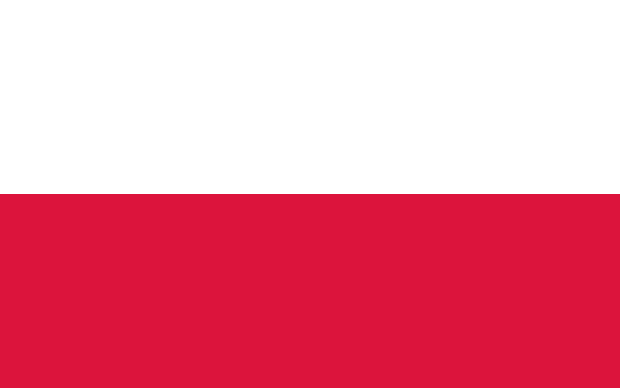
Poland

Flag is available in resolutions
![]() |
![]() |
Poland
Poland, officially the Republic of Poland, is a large and historically significant country nestled in the heart of Central Europe, widely recognized for its profound cultural heritage, unwavering national spirit, and a history marked by both glorious achievements and immense struggles. Its strategic location, bordered by Germany to the west, the Czech Republic and Slovakia to the south, Ukraine and Belarus to the east, and Lithuania and the Russian exclave of Kaliningrad Oblast to the northeast, along with a substantial Baltic Sea coastline to the north, has historically placed it at a crossroads of European civilization. This pivotal position has profoundly shaped Poland’s destiny, fostering a unique national identity deeply rooted in resilience and a steadfast commitment to freedom and tradition.
Geography
Geographically, Poland presents a predominantly lowland landscape, forming a significant part of the vast North European Plain. The country’s diverse topography features extensive plains, gently rolling hills, and a multitude of picturesque lakes, most notably concentrated in the northern Masurian Lake District, a popular destination for nature lovers. The majestic Vistula (Wisła) River, Poland’s longest, serves as a vital artery, originating in the Carpathian Mountains and gracefully winding its way through prominent cities like Kraków, the historic royal capital, and Warsaw, the modern capital, before ultimately flowing into the Baltic Sea. To the south, the towering Carpathian Mountains, including the stunning Tatra range, establish a natural and dramatic border, offering breathtaking alpine vistas, pristine national parks, and renowned opportunities for winter sports. The Baltic Sea coast, stretching for over 500 kilometers, boasts sandy beaches, extensive dunes, and crucial port cities such as Gdańsk, Gdynia, and Szczecin, which are vital hubs for international trade, shipbuilding, and maritime activities. This rich geographical tapestry has not only influenced Poland’s historical development but also provides fertile agricultural lands and strategic waterways that continue to underpin its economy.
History
Poland’s history is an epic narrative, intricately woven with threads of both profound glory and devastating tragedy, reflecting its enduring spirit. The foundations of the Polish state were laid in the 10th century by the Piast dynasty, with the pivotal adoption of Christianity in 966 AD under Mieszko I marking Poland’s formal integration into the cultural and political sphere of Western Europe. This early period saw the consolidation of power and the establishment of a distinct national identity. The subsequent Jagiellonian dynasty, particularly in the late Middle Ages and early modern period, witnessed the zenith of Polish power and prestige through the formation of the Polish-Lithuanian Commonwealth in 1569. This immense and powerful multi-ethnic state, stretching from the Baltic to the Black Sea, was renowned for its groundbreaking system of „Golden Liberty,“ a unique form of noble democracy that granted extensive rights to the nobility, including the right to elect their monarch. This era, often celebrated as Poland’s Golden Age, fostered an extraordinary environment of cultural flourishing, intellectual advancement, and religious tolerance, becoming a haven for various faiths. However, internal political weaknesses, coupled with increasing external pressures from aggressive neighboring powers, gradually led to its decline. The late 18th century saw the tragic partitions of Poland by Russia, Prussia, and Austria, which systematically erased the independent Polish state from the map of Europe for a staggering 123 years. Despite this prolonged subjugation, the Polish national spirit endured, fueled by insurrections and cultural preservation efforts. Poland finally regained its hard-won independence in 1918, following the tumultuous conclusion of World War I. This newfound sovereignty was short-lived, as the country suffered unimaginable devastation during World War II, which commenced with the brutal German invasion in September 1939, followed shortly thereafter by Soviet occupation from the east. The war resulted in the loss of millions of Polish lives, including the near-annihilation of its vibrant Jewish population, and irrevocably altered its borders and demographic composition. Following the war’s end, Poland fell under the political and economic dominance of the Soviet Union, becoming a communist state within the Eastern Bloc. This period was characterized by political repression and economic hardship, though it also saw significant industrialization. The seeds of change were sown in the late 1970s with the rise of the Solidarity trade union movement, led by Lech Wałęsa, which bravely challenged the communist regime. The peaceful revolutions of 1989, spearheaded by Solidarity, ultimately paved the way for Poland’s democratic transformation, its re-embrace of market economics, and a decisive return to the broader European community.
Demography
With a current population of approximately 38 million people, Poland ranks as the fifth most populous member state within the European Union. Its demographic landscape has undergone profound transformations over the past century. Historically, Poland was a highly multi-ethnic nation, a legacy of the Polish-Lithuanian Commonwealth. However, the cataclysmic events of World War II, coupled with subsequent border shifts and large-scale forced migrations, drastically altered this composition, resulting in Poland becoming one of Europe’s most ethnically homogeneous countries, with over 96% of its citizens identifying as Polish. The vast majority of Poles are Roman Catholic, a faith that has played an indelible role in shaping national identity and resistance throughout history. In more recent years, particularly since its EU accession, Poland has experienced a modest, yet growing, influx of immigrants, primarily from neighboring Ukraine, which has contributed to a slight, but notable, diversification of its population. Like many developed nations, Poland faces the demographic challenge of an aging population, marked by a declining birth rate and increasing life expectancy. This trend poses long-term implications for the labor market, social welfare systems, and the overall economic dynamism of the country. Urbanization remains a significant trend, with major metropolitan areas such as Warsaw, Kraków, Łódź, and Wrocław serving as vibrant economic, cultural, and educational hubs, attracting internal migration from less populated rural regions.
Economy
Since embarking on its transition from a centrally planned economy in 1989, Poland has achieved truly remarkable economic success, often hailed as a leading post-communist success story. Its pivotal accession to the European Union in 2004 proved to be a transformative moment, providing unparalleled access to the vast single market, attracting substantial foreign direct investment, and benefiting from significant structural and cohesion funds. The Polish economy is now the largest in Central Europe and consistently ranks among the fastest-growing within the EU, characterized by a robust, diversified, and increasingly innovative structure. Key sectors driving this growth include a strong manufacturing base, particularly in automotive components, electronics, and household appliances; a rapidly expanding services sector, encompassing information technology, finance, and business process outsourcing; and a still significant, though modernizing, agricultural sector. Poland has firmly established itself as a regional hub for foreign direct investment, capitalizing on its strategic geographical location, a well-educated and skilled workforce, and competitive labor costs. While its economic trajectory remains overwhelmingly positive, challenges persist. These include the ongoing need for further innovation and research and development investment to move up the value chain, addressing persistent regional income disparities, and navigating the complex transition towards a more sustainable and greener economy in line with EU objectives. Despite these hurdles, Poland’s dynamic economic model and strong commitment to European integration position it favorably for continued prosperity.
Conclusion
In conclusion, Poland stands as a compelling testament to the enduring power of resilience, adaptation, and transformation. From its ancient Piast roots and periods of imperial grandeur as the Polish-Lithuanian Commonwealth, through the profound ravages of war and the decades under the constraints of communism, the nation has consistently demonstrated an extraordinary capacity to rebuild, redefine, and reassert itself. Today, as a steadfast democratic member of the European Union and a crucial ally within NATO, Poland plays an increasingly significant and proactive role on the international stage, adeptly balancing its deep historical awareness and cultural pride with a dynamic, forward-looking vision for its future. Its vibrant cultural heritage, strategic geographical position, and remarkably dynamic economy collectively position Poland as a significant and influential player in the evolving political, economic, and cultural landscape of 21st-century Europe.
Information about Poland
The information comes from the publication CIA The World Factbook.
Automated text translation, excuse errors, please!
Country Poland is situated in a location / continent Europe. Poland has an area of 312 685 km2 and 38 415 284 residents. The highest point has a height 2 499 above sea level. and it is called Rysy. The lowest point is located at the level of -2 above sea level and it is named near Raczki Elblaskie. System of government is republic and the date of independence 11th November 1918. The capital city is Warsaw. Poland has the international abbreviation PL.
Recommended to visit: Botswanská vlajka
Poland - economy
Total gross domestic product (GDP) is 781 500 000 000 $. Total gross domestic product per capita in purchasing power parity is 20 600 $. GDP grows by 4.40 % a year. Inflation (consumer price index) is equal to 4.30 % a year. Poland have 17 850 000 working-age population (from a total population 38 415 284 people). Unemployment is at 12.40 %. Poland issued 7.10 % GDP to healt care and 1,90 % GDP to army. The public debt of the country is 56.70 % GDP. The total amount of foreign debt is 320 000 000 000 USD.
Poland - demography
As suggested above, Poland has 38 415 284 people. Population growth is in the amount -0.08 % per year. Number of children born per 1000 population per year is 9.96.Every mother has average 1.31 children. The infant mortality rate is 6.42 and maternal mortality 5.00 deaths per 100,000 births. Average estimated life expectancy makes 76.25 years. Mortality is 10.24 people per 1000 population per year.
Poland - transport and telecommunications
Poland has 423 997 km of roads, 19 428 km of railway lines and 125 airports. The total length of waterways (navigable rivers, canals, etc.) is 3 997 km. There is registered 9 ships.
Number of active mobile phones (sim card) in the country Poland is 49 200 000. Number of active fixed telephone lines is 6 921 000. Poland has 22 452 000 internet users, who have the available 12 928 000 Internet connections. Poland has been assigned a domain first Choose range .pl.
Poland - energetics
Poland consumes a year 127 200 000 000 kWh of electricity. Annual electricity production is 147 500 000 000 kWh in power plants with a total installed electrical capacity 33 030 000 kW. Poland exports 7 664 000 000 kWh and imports 6 310 000 000 kWh of electricity per year Energy mix of power generation is as follows: fossil fuels: 90.4 %, nuclear energy: 0 %, renewable: 2.5 %, hydropower: 2.8 %. The country Poland is harvested annually 19 730 barrels of oil.
World countries flags
Omalovánky pro děti:
Online omalovánky aut a autíček zdarmaObrázky budov a staveb online k vybarvení
Online omalovánky dinosauři
Online omalovánky dopravních prostředků
Obrázky koní online k vybarvení pro děti
Počítačové, internetové online omalovánky
Pohádkové postavy online k vybarvení
Obrázky povolání a zaměstnání lidí k vybarvení
Online omalovánky princezny k vybarvení
Příroda - obrázky k vybarvení na počítači
Omalovánky psi pro děti online k vybarvení
Online omalovánky roztomilých zvířatek
Vánoční, adventní online omalovánky zdarma
Velikonoční online omalovánky pro děti zdarma
Online omalovánky, obrázky vlaků k vybarvení
Dále doporučujeme:
Odkazy nejen na naše partnerské webyOdkazy na užitečné webové stránky
Doporučené odkazy na zajímavé weby
Naše tipy na užitečné weby
Zajímavé webové stránky
Omalovánky pro děti:
Online omalovánky aut a autíček zdarmaObrázky budov a staveb online k vybarvení
Online omalovánky dinosauři
Online omalovánky dopravních prostředků
Obrázky koní online k vybarvení pro děti
Počítačové, internetové online omalovánky
Pohádkové postavy online k vybarvení
Obrázky povolání a zaměstnání lidí k vybarvení
Online omalovánky princezny k vybarvení
Příroda - obrázky k vybarvení na počítači
Omalovánky psi pro děti online k vybarvení
Online omalovánky roztomilých zvířatek
Vánoční, adventní online omalovánky zdarma
Velikonoční online omalovánky pro děti zdarma
Online omalovánky, obrázky vlaků k vybarvení
Tapety na plochu:
Full HD tapety na mobil 1080x1920Pozadí pro mobilní telefony 1200x1920
Wallpapers na plochu 1600x1200
Pozadí na plochu 1680x1050
HD tapety na plochu Windows 1280x720
Obrázky na plochu 1920x1440
Obrázky na plochu Windows 1366x768
Wallpapery na plochu počítače 1920x1200
Přáníčko k svátku:
Přání k jmeninám dětemGratulace k jmeninám pro děti
Přáníčka k svátku podle jmen
Texty k svátku sms
Texty k jmeninám pro muže
Blahopřání k jmeninám podle jmen
Tapety na plochu:
Tapety na plochu 1920x1280Wallpapery na plochu 2560x1440
Tapety na PC, mobil tablet 2560x1920
Obrázky na plochu 1920x1440
Wallpapery na pozadí 640x480
Full HD tapety na mobil 1080x1920
Pozadí na plochu 2048x1536
Pozadí pro mobilní telefony 1200x1920
Přáníčko k svátku:
Přání k jmeninám dětemGratulace k jmeninám pro děti
Přáníčka k svátku podle jmen
Texty k svátku sms
Texty k jmeninám pro muže
Blahopřání k jmeninám podle jmen
Přáníčka, přání, blahopřání a gratulace:
Nejlepší přání k sňatkuZajímavá blahopřání k svatbě
Obrázková přáníčka k narozeninám
Humorná přání k výročí sňatku
Vtipná SMS, MMS blahopřání k jmeninám
Veselá báseň ke svátku pro děti
Romantická báseň k narozeninám
Legrační přání k jmeninám pro děti
Netradiční blahopřání k výročí svatby
Zajímavá SMS, MMS přání k jmeninám k jmeninám
Narozeninové přání:
Přání k narozeninám smsNarozeninový text podle jmen
Texty k narozeninám pro muže
Narozeninové texty pro ženu
Narozeninové přání dětem
Zamilované zprávy:
Romantické psaní miláčkoviRomantické vzkazy klukovi
Stýskací sms vzkazy
Vyznání lásky pomocí sms
Omluvné sms zprávy
Zamilované vzkazy holce
Zamilované SMS na dobré ráno
Zamilované verše pro miláčka
|
|
|
|
|
|
|
|
|
|
|
|
|
|
|

|
|
|
|
|
|

|
|

|

|
|
|
|