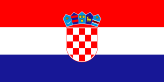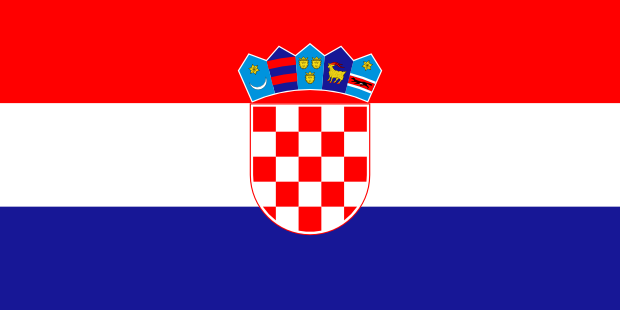
Croatia

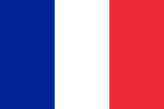
Flag is available in resolutions
![]() |
![]() |
Croatia
Croatia, or Hrvatska as it’s known natively, is a captivating country situated at the crossroads of Central Europe and Southeast Europe, bordering the Adriatic Sea. Its distinctive crescent shape encapsulates a remarkable diversity of landscapes, cultures, and histories within its relatively compact borders. From its sun-drenched coastlines adorned with thousands of islands to its rugged mountain ranges and fertile plains, Croatia offers a tapestry of experiences, deeply proud of its heritage and a resilient spirit forged through centuries of struggle. It is a vibrant modern European state that continues to charm with its unparalleled beauty and rich cultural legacy.
The geographical contours of Croatia are as varied as they are stunning, playing a pivotal role in defining its regional identities. Its most prominent feature is undoubtedly its extensive Adriatic coastline, stretching over 1,777 kilometers on the mainland and boasting more than a thousand islands, islets, and rocks. This intricate archipelago is a result of the Dinaric Alps, which run parallel to the coast, creating a dramatic karstic landscape characterized by caves, sinkholes, and a rugged interior. Further inland, the Dinaric range gradually gives way to the Pannonian Basin, a fertile lowland region in the northeast, traversed by major rivers like the Sava and Danube. This geographical duality – the Mediterranean coast and the continental interior – results in distinct climatic zones: a pleasant Mediterranean climate along the coast with hot, dry summers and mild, rainy winters, and a continental climate inland with hot summers and cold, snowy winters. Such diversity not only provides breathtaking scenery but also supports a wide array of ecosystems and agricultural practices, from olive groves and vineyards along the coast to extensive farmlands in the east.
Croatia’s history is a complex and often tumultuous narrative, marked by periods of independence, foreign rule, and relentless perseverance. The territory has been inhabited since prehistoric times, with significant Roman influence evident in ancient cities like Pula and Split, home to Diocletian’s Palace. Slavic tribes, the ancestors of modern Croats, settled in the region in the 7th century, eventually establishing their own independent kingdom by the 10th century. This golden age of Croatian statehood was followed by a personal union with Hungary in 1102, lasting for centuries, during which Croatia retained a degree of autonomy but faced constant pressure from the Ottoman Empire. Later, the country became part of the Habsburg Monarchy, which brought about a period of relative stability and cultural development, particularly in the 19th century when Croatian national consciousness began to flourish. After World War I, Croatia joined the newly formed Kingdom of Serbs, Croats, and Slovenes, which later became Yugoslavia. The collapse of communism in Eastern Europe and the subsequent dissolution of Yugoslavia in the early 1990s led to Croatia’s declaration of independence in 1991, followed by the brutal Croatian War of Independence (1991-1995). This conflict, a defining moment in modern Croatian history, resulted in significant human cost and destruction but ultimately secured the nation’s sovereignty. Since then, Croatia has steadily rebuilt, integrating into European structures and joining the European Union in 2013 and the Eurozone in 2023, firmly establishing its place as a stable and democratic European state.
Croatia’s demographic landscape presents a fascinating, albeit challenging, picture. With a population of approximately 3.8 million people according to the 2021 census, the country has experienced a notable decline in recent decades, primarily due to low birth rates and significant emigration, particularly since joining the European Union. The vast majority of the population, over 90%, identifies as Croat, while significant minority groups include Serbs, Bosniaks, Slovenes, Hungarians, Czechs, and others, predominantly residing in specific regions. The religious composition is largely Roman Catholic, reflecting centuries of historical and cultural ties, with a smaller but notable Orthodox Christian community and other religious groups. The population is increasingly urbanized, with the capital city of Zagreb being the largest urban center, followed by Split, Rijeka, and Osijek. However, rural areas, particularly in the interior and on some islands, face challenges of depopulation and an aging populace. The emigration of younger, educated individuals to Western European countries in search of better economic opportunities remains a significant concern, impacting the labor market and long-term demographic sustainability, prompting the government to explore various policies to reverse this trend and encourage return migration.
The Croatian economy has undergone a significant transformation since its independence, transitioning from a socialist system to a market-oriented one, with tourism emerging as its undisputed powerhouse. The stunning Adriatic coast, with its pristine waters, historic cities, and vibrant cultural heritage, attracts millions of international visitors annually, making tourism a critical driver of GDP, employment, and foreign exchange earnings. Beyond tourism, other important sectors include manufacturing, particularly food processing, pharmaceuticals, and shipbuilding, though the latter has faced considerable challenges. Agriculture, traditionally strong in the Pannonian plains, contributes to the economy with significant production of cereals, oilseeds, and wine. Croatia’s accession to the European Union in 2013 provided access to the EU’s single market and structural funds, which have been instrumental in modernizing infrastructure and boosting economic growth, though it also brought increased competition. The adoption of the Euro in 2023 further integrated Croatia into the European economic sphere, aiming to reduce transaction costs and foster greater stability. Challenges remain, including high public debt, regional disparities in development, and the need for further structural reforms to improve competitiveness and address the brain drain. However, with its strategic location, developing infrastructure, and a skilled workforce, Croatia continues to build a resilient and diversified economy, leveraging its natural beauty and European integration.
In essence, Croatia is a land of profound contrasts and enduring charm. Its geographical splendor, from the sun-drenched islands to the majestic Dinaric peaks, provides a breathtaking backdrop to a history rich with Roman grandeur, medieval kingdoms, and a hard-won independence. The resilience of its people, their vibrant culture, and their unwavering spirit are palpable in every historic town, every traditional festival, and every warm welcome extended to visitors. While facing contemporary challenges such as demographic shifts and the ongoing need for economic diversification, Croatia has firmly established itself as a proud European nation, offering a unique blend of ancient heritage and modern vitality. It remains a testament to the enduring power of natural beauty intertwined with a deeply rooted cultural identity, inviting the world to explore its many treasures.
Information about Croatia
The information comes from the publication CIA The World Factbook.
Automated text translation, excuse errors, please!
Country Croatia is situated in a location / continent Europe. Croatia has an area of 56 594 km2 and 4 480 043 residents. The highest point has a height 1 830 above sea level. and it is called Dinara. The lowest point is located at the level of 0 above sea level and it is named Adriatic Sea. System of government is republic and the date of independence 25th June 1991. The capital city is Zagreb. Croatia has the international abbreviation IV.
Recommended to visit: Vatikánská vlajka
Croatia - economy
Total gross domestic product (GDP) is 81 360 000 000 $. Total gross domestic product per capita in purchasing power parity is 18 400 $. GDP grows by 0.00 % a year. Inflation (consumer price index) is equal to 2.30 % a year. Croatia have 1 717 000 working-age population (from a total population 4 480 043 people). Unemployment is at 17.70 %. Croatia issued 7.80 % GDP to healt care and 2,39 % GDP to army. The public debt of the country is 43.90 % GDP. The total amount of foreign debt is 66 300 000 000 USD.
Croatia - demography
As suggested above, Croatia has 4 480 043 people. Population growth is in the amount -0.09 % per year. Number of children born per 1000 population per year is 9.57.Every mother has average 1.44 children. The infant mortality rate is 6.06 and maternal mortality 17.00 deaths per 100,000 births. Average estimated life expectancy makes 75.99 years. Mortality is 11.99 people per 1000 population per year.
Croatia - transport and telecommunications
Croatia has 29 343 km of roads, 2 722 km of railway lines and 69 airports. The total length of waterways (navigable rivers, canals, etc.) is 785 km. There is registered 77 ships.
Number of active mobile phones (sim card) in the country Croatia is 5 115 000. Number of active fixed telephone lines is 1 761 000. Croatia has 2 234 000 internet users, who have the available 725 521 Internet connections. Croatia has been assigned a domain first Choose range .hr.
Croatia - energetics
Croatia consumes a year 18 870 000 000 kWh of electricity. Annual electricity production is 14 670 000 000 kWh in power plants with a total installed electrical capacity 4 021 000 kW. Croatia exports 1 916 000 000 kWh and imports 6 600 000 000 kWh of electricity per year Energy mix of power generation is as follows: fossil fuels: 47.2 %, nuclear energy: 0 %, renewable: 0.8 %, hydropower: 44.7 %. The country Croatia is harvested annually 17 650 barrels of oil.
World countries flags
Omalovánky pro děti:
Online omalovánky aut a autíček zdarmaObrázky budov a staveb online k vybarvení
Online omalovánky dinosauři
Online omalovánky dopravních prostředků
Obrázky koní online k vybarvení pro děti
Počítačové, internetové online omalovánky
Pohádkové postavy online k vybarvení
Obrázky povolání a zaměstnání lidí k vybarvení
Online omalovánky princezny k vybarvení
Příroda - obrázky k vybarvení na počítači
Omalovánky psi pro děti online k vybarvení
Online omalovánky roztomilých zvířatek
Vánoční, adventní online omalovánky zdarma
Velikonoční online omalovánky pro děti zdarma
Online omalovánky, obrázky vlaků k vybarvení
Narozeninový text:
Narozeninová přáníčka podle jmenPřáníčko k narozeninám pro muže
Narozeninové přání podle věku
Narozeninový text dětem
Blahopřání k narozeninám podle jmen
Přáníčko k svátku:
Přáníčka k jmeninám pro dětiPřáníčka k svátku dětem
Přání k jmeninám podle jmen
Texty k svátku, sms texty
Blahopřání k svátku pro kamarádku
Gratulace k svátku sms
|
|
|
|
|
|
|
|
|
|
|
|
|
|
|

|
|
|
|
|
|

|
|

|

|
|
|
|