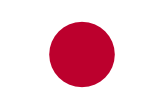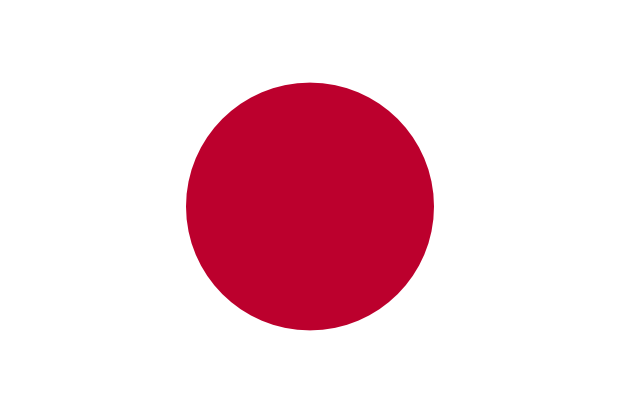
Japan

Flag is available in resolutions
![]() |
![]() |
Japan
Japan, an archipelago nation in East Asia, stands as a testament to resilience, innovation, and a deeply rooted cultural heritage. From its ancient traditions to its futuristic metropolises, Japan offers a fascinating study of a society that has masterfully blended the old with the new, carving out a unique identity on the global stage. Its distinctive character is, in large part, shaped by its geography, a collection of some 6,852 islands, with the four largest—Honshu, Hokkaido, Kyushu, and Shikoku—comprising the vast majority of its landmass. This insular nature has historically fostered a sense of isolation and distinct cultural development, while simultaneously driving a need for maritime prowess and trade. Geographically, Japan is predominantly mountainous, with approximately 73% of its land being unsuitable for agriculture or habitation. This dramatic topography, born from its location on the Pacific Ring of Fire, is responsible for its breathtaking landscapes, active volcanoes like the iconic Mount Fuji, and frequent seismic activity, including earthquakes and tsunamis, which have profoundly influenced its architecture, engineering, and disaster preparedness. The climate varies significantly from the subarctic north of Hokkaido to the subtropical south of the Ryukyu Islands, allowing for diverse ecosystems and agricultural practices, though the limited arable land has always been a critical factor in its economic and demographic planning. The reliance on the sea for sustenance and trade has been a constant throughout Japanese history, shaping its people’s ingenuity and resourcefulness.
Japan’s history is a rich tapestry woven from millennia of distinct cultural evolution, marked by periods of profound change and enduring traditions. Beginning with the prehistoric Jomon period, followed by the agricultural innovations of the Yayoi era and the emergence of early states, Japan gradually unified under imperial rule, though true political power often resided with powerful aristocratic clans or, later, military shoguns. The feudal era, spanning from the 12th to the 19th centuries, saw the rise of the samurai class, a distinct warrior caste whose code of bushido profoundly influenced Japanese ethics and social structure. This period culminated in the Tokugawa Shogunate’s policy of „Sakoku“ or national isolation for over 200 years, intentionally limiting foreign contact to preserve stability and cultural purity. The dramatic forced opening by Commodore Perry in 1853 precipitated the Meiji Restoration in 1868, a pivotal moment that rapidly transformed Japan from an isolated feudal society into a modern, industrialized world power, embracing Western technology and institutions while striving to maintain its unique identity. This era of rapid expansion, however, eventually led to imperialistic ambitions and participation in World War II, culminating in devastating defeat. The post-war period saw Japan rebuild with remarkable speed, transforming into a pacifist, democratic nation and an economic powerhouse, a testament to its people’s resilience and capacity for reinvention.
This historical trajectory, combined with modern socio-economic factors, has profoundly shaped Japan’s unique demographic landscape. With a population of over 125 million, Japan is one of the world’s most densely populated countries, especially in its coastal urban corridors like the Tokaido megalopolis, stretching from Tokyo to Osaka. However, the nation faces an unprecedented demographic crisis: a rapidly aging population coupled with one of the lowest birth rates globally. Approximately 29% of its population is over 65, and this proportion is projected to continue rising, leading to significant challenges for its social welfare system, healthcare, and labor force. The shrinking workforce and increasing dependency ratio threaten sustained economic growth and innovation, prompting government initiatives to encourage larger families, enhance women’s participation in the labor force, and cautiously consider immigration. Despite these challenges, Japan remains a highly homogeneous society, with over 98% of its population being ethnic Japanese, a factor that has historically contributed to a strong sense of national identity but also presents unique considerations in a globalized world. The concentration of people in urban centers, particularly Tokyo, which is the world’s largest metropolitan area, creates both vibrant cultural hubs and distinct regional disparities, with many rural areas experiencing depopulation and economic decline.
Economically, Japan is a global titan, boasting the world’s third-largest nominal GDP, an achievement often referred to as the „economic miracle“ following World War II. Its post-war recovery was fueled by an export-driven strategy, focusing initially on textiles and then rapidly transitioning to high-quality manufactured goods. Today, Japan is renowned for its technological prowess and innovation, dominating sectors such as automotive manufacturing (Toyota, Honda, Nissan), electronics (Sony, Panasonic), robotics, precision machinery, and advanced materials. Japanese companies are at the forefront of research and development, holding numerous patents and contributing significantly to global technological advancements, particularly in areas like artificial intelligence and sustainable energy solutions. Despite this technological strength, Japan’s economy has grappled with persistent challenges since the early 1990s, including prolonged periods of deflation, high public debt—one of the highest ratios to GDP among developed nations—and the aforementioned labor shortages exacerbated by demographic shifts. Government policies, often dubbed „Abenomics,“ have attempted to stimulate growth through monetary easing, fiscal stimulus, and structural reforms, with mixed results. Japan’s commitment to quality, efficiency, and continuous improvement, embodied by concepts like „Kaizen,“ remains a cornerstone of its industrial strength. Furthermore, its strong emphasis on education and a highly skilled workforce continues to underpin its economic resilience, allowing it to adapt to evolving global demands and maintain its competitive edge in specialized, high-value industries. The nation’s extensive infrastructure, efficient logistics, and sophisticated financial markets further solidify its position as a crucial player in the global economy, navigating complex geopolitical landscapes and striving for sustainable growth amidst domestic and international pressures.
In conclusion, Japan stands as a profoundly complex and compelling nation, a land where ancient customs coexist with cutting-edge technology, and where profound challenges are met with unwavering determination. From its dramatic geographical foundations and a history marked by both isolation and rapid transformation, to its current demographic shifts and formidable economic power, Japan continues to captivate and inspire. It is a society that values harmony, precision, and innovation, constantly seeking to redefine its place in a rapidly changing world while holding firm to the unique essence that defines it.
Information about Japan
The information comes from the publication CIA The World Factbook.
Automated text translation, excuse errors, please!
Country Japan is situated in a location / continent East Asia. Japan has an area of 377 915 km2 and 127 368 088 residents. The highest point has a height 3 776 above sea level. and it is called Mount Fuji. The lowest point is located at the level of -4 above sea level and it is named Hachiro-gata. System of government is constitutional monarchy.The capital city is Tokyo. Japan has the international abbreviation JA.
Recommended to visit: Malawijská vlajka
Japan - economy
Total gross domestic product (GDP) is 4 497 000 000 000 $. Total gross domestic product per capita in purchasing power parity is 35 200 $. GDP grows by -0.70 % a year. Inflation (consumer price index) is equal to -0.30 % a year. Japan have 65 930 000 working-age population (from a total population 127 368 088 people). Unemployment is at 4.60 %. Japan issued 9.30 % GDP to healt care and 0,80 % GDP to army. The public debt of the country is 211.70 % GDP. The total amount of foreign debt is 2 719 000 000 000 USD.
Japan - demography
As suggested above, Japan has 127 368 088 people. Population growth is in the amount -0.08 % per year. Number of children born per 1000 population per year is 8.39.Every mother has average 1.39 children. The infant mortality rate is 2.21 and maternal mortality 5.00 deaths per 100,000 births. Average estimated life expectancy makes 83.91 years. Mortality is 9.15 people per 1000 population per year.
Japan - transport and telecommunications
Japan has 1 210 251 km of roads, 27 182 km of railway lines and 175 airports. The total length of waterways (navigable rivers, canals, etc.) is 1 770 km. There is registered 684 ships.
Number of active mobile phones (sim card) in the country Japan is 129 868 000. Number of active fixed telephone lines is 64 585 000. Japan has 99 182 000 internet users, who have the available 63 466 000 Internet connections. Japan has been assigned a domain first Choose range .jp.
Japan - energetics
Japan consumes a year 859 700 000 000 kWh of electricity. Annual electricity production is 937 600 000 000 kWh in power plants with a total installed electrical capacity 284 500 000 kW. Japan exports 0 kWh and imports 0 kWh of electricity per year Energy mix of power generation is as follows: fossil fuels: 63.9 %, nuclear energy: 17.2 %, renewable: 2.3 %, hydropower: 7.7 %. The country Japan is harvested annually 17 480 barrels of oil.
World countries flags
Omalovánky pro děti:
Online omalovánky aut a autíček zdarmaObrázky budov a staveb online k vybarvení
Online omalovánky dinosauři
Online omalovánky dopravních prostředků
Obrázky koní online k vybarvení pro děti
Počítačové, internetové online omalovánky
Pohádkové postavy online k vybarvení
Obrázky povolání a zaměstnání lidí k vybarvení
Online omalovánky princezny k vybarvení
Příroda - obrázky k vybarvení na počítači
Omalovánky psi pro děti online k vybarvení
Online omalovánky roztomilých zvířatek
Vánoční, adventní online omalovánky zdarma
Velikonoční online omalovánky pro děti zdarma
Online omalovánky, obrázky vlaků k vybarvení
Narozeninové blahopřání:
Narozeninový text podle jmenPřáníčko k narozeninám pro ženu
Narozeninová přáníčka sms
Narozeninové blahopřání dětem
Narozeninové texty podle věku
Blahopřání k jmeninám:
Přáníčka k jmeninám, sms textyBlahopřání k svátku podle jmen
Texty k svátku pro děti
Přání k svátku dětem
Gratulace k svátku sms
Gratulace k jmeninám pro ženu
|
|
|
|
|
|
|
|
|
|
|
|
|

|

|

|

|

|

|

|

|

|
|

|

|

|

|

|