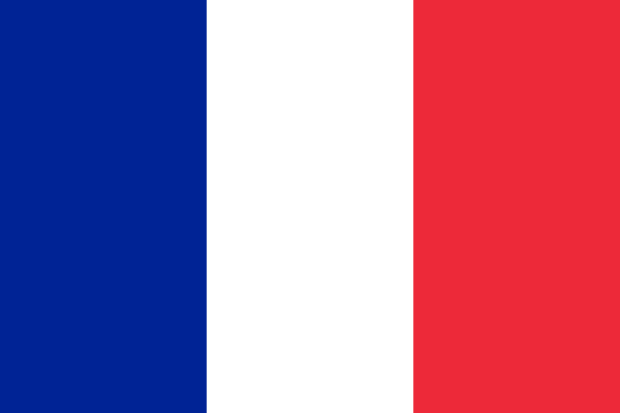
France

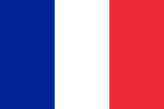
Flag is available in resolutions
![]() |
![]() |
France
France, often affectionately referred to as „L’Hexagone“ due to its geometric shape, stands as a cornerstone of Western Europe, a nation whose profound influence has shaped global culture, politics, and thought for centuries. From its ancient origins to its modern role as a leading member of the European Union and the G7, France embodies a rich tapestry of history, diverse landscapes, and an unparalleled commitment to art, gastronomy, and the republican ideals of Liberté, égalité, fraternité. Its strategic location, bridging the Atlantic and the Mediterranean, has historically positioned it at the crossroads of European civilization, fostering a unique identity that continues to captivate and inspire.
Geographically, France is remarkably diverse, encompassing a wide array of natural environments within its borders. To the south, the majestic Pyrenees form a natural frontier with Spain, while the towering Alps dominate the southeastern landscape, home to Western Europe’s highest peak, Mont Blanc. The country is also crisscrossed by several major rivers, including the Seine, which flows through Paris, the Loire, renowned for its châteaux, the Rhône, connecting to the Mediterranean, and the Garonne, leading to the Atlantic. Extensive plains dominate the north and west, providing fertile ground for agriculture, while its lengthy coastlines along the Atlantic Ocean, the English Channel, and the Mediterranean Sea offer varied maritime climates and cultures. This geographical diversity contributes significantly to France’s rich biodiversity and its varied regional identities, from the rugged beauty of Brittany to the sun-drenched vineyards of Provence.
The history of France is a saga of empires, revolutions, and profound cultural shifts. Its roots trace back to ancient Gaul, conquered by Julius Caesar in the 1st century BCE, which subsequently became a vital part of the Roman Empire, leaving an indelible mark on its language and legal systems. Following the collapse of Rome, the Franks emerged, establishing a kingdom that would eventually evolve into France, with figures like Charlemagne shaping early European identity. The Capetian dynasty, beginning in the 10th century, gradually unified the disparate feudal territories into a more cohesive state. The Hundred Years’ War against England, the Renaissance, and the Age of Absolutism under monarchs like Louis XIV, the „Sun King,“ further forged the national character. However, the most transformative event was undoubtedly the French Revolution of 1789, which dismantled the monarchy, gave birth to republican ideals, and profoundly influenced political thought worldwide. Napoleon Bonaparte’s subsequent rise and fall reshaped Europe, while the 19th and 20th centuries saw France grapple with colonialism, two devastating World Wars, and the establishment of its current Fifth Republic. Throughout these tumultuous periods, France has consistently reinvented itself, maintaining its core values while adapting to a changing world.
Demographically, France is the second-most populous country in the European Union, with a population exceeding 68 million people. Its demographic profile is characterized by a relatively stable birth rate and a significant degree of ethnic and cultural diversity, largely due to successive waves of immigration throughout the 20th century, particularly from former colonies in North Africa and Sub-Saharan Africa, as well as from other European nations. This has created a vibrant, multicultural society, especially in major urban centers like Paris, Lyon, and Marseille. French is the official language, though regional languages such as Breton, Basque, and Occitan persist in certain areas. While historically predominantly Roman Catholic, France today is a staunchly secular state (lacité), ensuring freedom of religion while maintaining strict separation of church and state. This commitment to secularism is a cornerstone of its republican identity, navigating the complexities of modern diversity within a framework of shared national values.
Economically, France boasts one of the world’s largest and most developed economies, ranking among the top global powers. Its economic strength is highly diversified, with key sectors including tourism, which consistently makes France the world’s most visited country, luxury goods (fashion, cosmetics, wines, spirits), aerospace (Airbus), automotive (Renault, Peugeot-Citroën), and advanced manufacturing. Agriculture remains a significant sector, making France a leading agricultural producer within the EU, renowned for its wheat, dairy, and wine. The service sector dominates, accounting for a substantial portion of GDP and employment. France is also a major proponent of nuclear energy, generating a large percentage of its electricity from nuclear power plants. As a founding member of the European Union and the Eurozone, France plays a pivotal role in European economic policy, advocating for greater integration and a strong social market economy. Despite its strengths, the economy faces ongoing challenges related to unemployment, public debt, and the need for structural reforms to maintain competitiveness in a globalized world.
Beyond its economic and political might, France’s cultural legacy is arguably its most enduring contribution to humanity. French art, from the Impressionists to the avant-garde, has captivated the world; its literature, spanning from Voltaire and Rousseau to Victor Hugo and Albert Camus, has shaped philosophical discourse; and its cinema continues to be a global benchmark for artistic integrity. French cuisine, recognized by UNESCO as intangible cultural heritage, is celebrated worldwide for its sophistication and regional diversity, from haute cuisine to rustic farmhouse dishes, paired with its legendary wines. Paris, the „City of Lights,“ stands as a global capital of fashion, art, and romance. The French commitment to intellectualism, critical thinking, and a certain *joie de vivre* permeates its society. Education is highly valued, and the nation’s healthcare system is consistently ranked among the best globally. France’s enduring appeal lies in this synthesis of its historical grandeur, its vibrant contemporary culture, and its unwavering dedication to the principles of liberty and human dignity.
Information about France
The information comes from the publication CIA The World Factbook.
Automated text translation, excuse errors, please!
Country France is situated in a location / continent Europe. France has an area of 643 801 km2 and 65 630 692 residents. The highest point has a height 4 807 above sea level. and it is called Mont Blanc. The lowest point is located at the level of -2 above sea level and it is named Rhone River delta. System of government is republic.The capital city is Paris. France has the international abbreviation FR.
Recommended to visit: Srílanská vlajka
France - economy
Total gross domestic product (GDP) is 2 246 000 000 000 $. Total gross domestic product per capita in purchasing power parity is 35 600 $. GDP grows by 1.70 % a year. Inflation (consumer price index) is equal to 2.30 % a year. France have 29 610 000 working-age population (from a total population 65 630 692 people). Unemployment is at 9.30 %. France issued 3.50 % GDP to healt care and 2,60 % GDP to army. The public debt of the country is 84.70 % GDP. The total amount of foreign debt is 5 633 000 000 000 USD.
France - demography
As suggested above, France has 65 630 692 people. Population growth is in the amount 0.50 % per year. Number of children born per 1000 population per year is 12.72.Every mother has average 2.08 children. The infant mortality rate is 3.37 and maternal mortality 8.00 deaths per 100,000 births. Average estimated life expectancy makes 81.46 years. Mortality is 8.85 people per 1000 population per year.
France - transport and telecommunications
France has 951 200 km of roads, 29 640 km of railway lines and 473 airports. The total length of waterways (navigable rivers, canals, etc.) is 8 501 km. There is registered 162 ships.
Number of active mobile phones (sim card) in the country France is 65 631 000. Number of active fixed telephone lines is 35 300 000. France has 45 262 000 internet users, who have the available 16 872 880 Internet connections. France has been assigned a domain first Choose range .fr.
France - energetics
France consumes a year 451 400 000 000 kWh of electricity. Annual electricity production is 539 000 000 000 kWh in power plants with a total installed electrical capacity 119 100 000 kW. France exports 66 600 000 000 kWh and imports 37 100 000 000 kWh of electricity per year Energy mix of power generation is as follows: fossil fuels: 20.5 %, nuclear energy: 53 %, renewable: 5.3 %, hydropower: 17.6 %. The country France is harvested annually 49 530 barrels of oil.
World countries flags
Omalovánky pro děti:
Online omalovánky aut a autíček zdarmaObrázky budov a staveb online k vybarvení
Online omalovánky dinosauři
Online omalovánky dopravních prostředků
Obrázky koní online k vybarvení pro děti
Počítačové, internetové online omalovánky
Pohádkové postavy online k vybarvení
Obrázky povolání a zaměstnání lidí k vybarvení
Online omalovánky princezny k vybarvení
Příroda - obrázky k vybarvení na počítači
Omalovánky psi pro děti online k vybarvení
Online omalovánky roztomilých zvířatek
Vánoční, adventní online omalovánky zdarma
Velikonoční online omalovánky pro děti zdarma
Online omalovánky, obrázky vlaků k vybarvení
Narozeninové přáníčko:
Narozeninové přáníčko dětemPřáníčko k narozeninám podle věku
Narozeninové přání pro muže
Narozeninový text pro ženu
Přáníčka k narozeninám sms
Přáníčka k svátku:
Texty k svátku pro mužePřáníčka k jmeninám pro kamarádku
Texty k jmeninám sms
Přáníčko k svátku podle jmen
Přáníčko k jmeninám podle jmen
Přání k jmeninám dětem
|
|
|
|
|
|
|
|
|
|
|
|
|

|
|

|
|

|

|
|
|

|
|

|

|
|
|
|