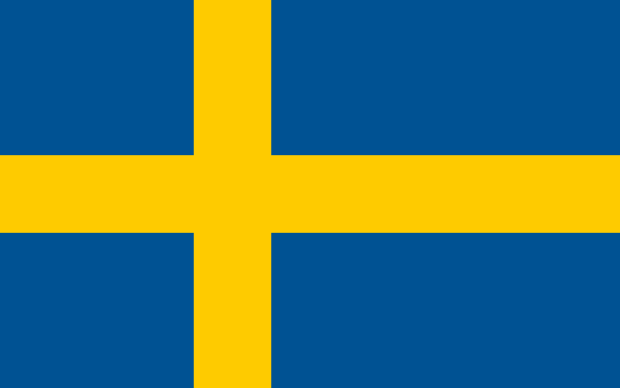
Sweden

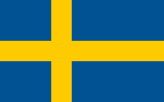
Flag is available in resolutions
![]() |
![]() |
Sweden
Sweden, or Sverige, is the largest Nordic country in Northern Europe, a land of vast, pristine forests, thousands of shimmering lakes, and a long, rugged coastline dotted with archipelagos. Bordered by Norway to the west, Finland to the east, and connected to Denmark by the Öresund Bridge to the south, Sweden’s geography varies dramatically, from the fertile agricultural plains in the south to the wild, mountainous terrain and subarctic climate of the north. The capital, Stockholm, often referred to as „the Venice of the North“, is built on 14 islands, blending historical charm with modern innovation. Other significant urban centers include Gothenburg on the west coast and Malmö in the south. This diverse landscape has not only provided abundant natural resources but also fostered a deep national appreciation for nature and outdoor pursuits, integral to the Swedish way of life.
Sweden’s history is a rich tapestry woven from Viking sagas and imperial ambitions, culminating in its journey towards becoming a modern welfare state. The earliest inhabitants left behind fascinating rock carvings, but it was during the Viking Age, from the 8th to the 11th centuries, that Swedish seafarers and traders embarked on expeditions eastward, establishing trade routes and settlements across Eastern Europe and Russia. The kingdom of Sweden began to consolidate its power in the medieval period, eventually forming part of the Kalmar Union before Gustav Vasa led Sweden’s secession in the early 16th century, laying the foundations for a sovereign nation. The 17th century marked Sweden’s emergence as a major European power, establishing a vast empire around the Baltic Sea under monarchs like Gustavus Adolphus. However, its dominance was short-lived, gradually diminishing after the Great Northern War in the early 18th century. The 19th century saw Sweden grappling with poverty, leading to significant emigration to North America, but also the beginnings of industrialization and the rise of democratic movements. Crucially, Sweden maintained a policy of neutrality through both World Wars, allowing it to avoid direct conflict and focus on internal development, which paved the way for its post-war economic boom and the construction of its renowned social welfare system.
With a population of just over 10 million people, Sweden is relatively sparsely populated, particularly outside its major urban areas. Historically, Sweden was characterized by a high degree of ethnic homogeneity, but the latter half of the 20th century and the early 21st century have seen a significant increase in immigration, making it a much more diverse society. This influx has enriched Swedish culture but also presented integration challenges. Swedish is the official language, a North Germanic language, though English proficiency is remarkably high across the population. While historically a predominantly Lutheran nation, secularization has been a strong trend, and today, a significant portion of the population identifies as non-religious, though the religious landscape has diversified with the arrival of various immigrant communities. Sweden consistently ranks high in global indices for quality of life, human development, and social equality, boasting a long life expectancy and a robust social safety net. Its society is often characterized by a strong emphasis on individualism, consensus-building, and a deep-seated commitment to gender equality and environmental protection. The concept of „lagom“ – meaning „just enough“ or „not too much, not too little“ – often encapsulates the Swedish approach to life, valuing balance and moderation. Urbanization continues to be a trend, with the majority of Swedes residing in cities and towns, particularly in the southern and central parts of the country.
Sweden’s economy is a prime example of a highly developed, export-oriented, and technologically advanced market economy, often referred to as the „Swedish Model“ – a unique blend of capitalism with a comprehensive welfare state. Despite its relatively small population, Sweden consistently punches above its weight on the global economic stage. Key sectors include manufacturing, particularly engineering, which produces world-renowned brands in automobiles (Volvo), telecommunications (Ericsson), and industrial machinery. Other significant industries are forestry, given the country’s vast timber resources, mining, and a rapidly growing service sector, especially in information technology and finance. Sweden is a hotbed of innovation, with one of the highest rates of research and development investment globally, fostering a vibrant startup ecosystem that has produced international successes like Spotify and Skype. The country is home to numerous multinational corporations that drive its export-led growth, including IKEA (furniture), H&M (fashion), and Electrolux (appliances). This economic prosperity is underpinned by a highly skilled workforce, strong trade unions, and a commitment to free trade. While taxes are relatively high to fund the extensive public services and social welfare programs – including universal healthcare, free education, and generous parental leave – the system is generally seen as contributing to social cohesion and economic stability. The currency is the Swedish Krona (SEK), and Sweden remains outside the Eurozone, having voted against adopting the Euro in a referendum. The nation’s commitment to sustainability is also reflected in its economy, with significant investments in renewable energy and green technologies.
Information about Sweden
The information comes from the publication CIA The World Factbook.
Automated text translation, excuse errors, please!
Country Sweden is situated in a location / continent Europe. Sweden has an area of 450 295 km2 and 9 103 788 residents. The highest point has a height 2 111 above sea level. and it is called Kebnekaise. The lowest point is located at the level of -2,4 above sea level and it is named reclaimed bay of Lake Hammarsjon, near Kristianstad. System of government is constitutional monarchy and the date of independence 6th June 1523. The capital city is Stockholm. Sweden has the international abbreviation SW.
Recommended to visit: Vlajka Izraele
Sweden - economy
Total gross domestic product (GDP) is 386 600 000 000 $. Total gross domestic product per capita in purchasing power parity is 40 900 $. GDP grows by 4.00 % a year. Inflation (consumer price index) is equal to 3.00 % a year. Sweden have 5 018 000 working-age population (from a total population 9 103 788 people). Unemployment is at 7.50 %. Sweden issued 9.90 % GDP to healt care and 1,50 % GDP to army. The public debt of the country is 37.50 % GDP. The total amount of foreign debt is 1 016 000 000 000 USD.
Sweden - demography
As suggested above, Sweden has 9 103 788 people. Population growth is in the amount 0.17 % per year. Number of children born per 1000 population per year is 10.24.Every mother has average 1.67 children. The infant mortality rate is 2.74 and maternal mortality 4.00 deaths per 100,000 births. Average estimated life expectancy makes 81.18 years. Mortality is 10.21 people per 1000 population per year.
Sweden - transport and telecommunications
Sweden has 572 900 km of roads, 11 633 km of railway lines and 230 airports. The total length of waterways (navigable rivers, canals, etc.) is 2 052 km. There is registered 135 ships.
Number of active mobile phones (sim card) in the country Sweden is 11 194 000. Number of active fixed telephone lines is 4 600 000. Sweden has 8 398 000 internet users, who have the available 5 727 000 Internet connections. Sweden has been assigned a domain first Choose range .se.
Sweden - energetics
Sweden consumes a year 127 100 000 000 kWh of electricity. Annual electricity production is 147 800 000 000 kWh in power plants with a total installed electrical capacity 35 290 000 kW. Sweden exports 12 850 000 000 kWh and imports 14 930 000 000 kWh of electricity per year Energy mix of power generation is as follows: fossil fuels: 12.5 %, nuclear energy: 25 %, renewable: 15.2 %, hydropower: 46.9 %.
World countries flags
Omalovánky pro děti:
Online omalovánky aut a autíček zdarmaObrázky budov a staveb online k vybarvení
Online omalovánky dinosauři
Online omalovánky dopravních prostředků
Obrázky koní online k vybarvení pro děti
Počítačové, internetové online omalovánky
Pohádkové postavy online k vybarvení
Obrázky povolání a zaměstnání lidí k vybarvení
Online omalovánky princezny k vybarvení
Příroda - obrázky k vybarvení na počítači
Omalovánky psi pro děti online k vybarvení
Online omalovánky roztomilých zvířatek
Vánoční, adventní online omalovánky zdarma
Velikonoční online omalovánky pro děti zdarma
Online omalovánky, obrázky vlaků k vybarvení
Narozeninové přáníčko:
Texty k narozeninám podle jmenNarozeninové texty pro muže
Narozeninové blahopřání sms
Narozeninové přání pro ženu
Blahopřání k narozeninám podle věku
Gratulace k jmeninám:
Přáníčka k svátku pro dětiPřáníčko k jmeninám pro ženu
Texty k svátku sms
Gratulace k svátku dětem
Přání k svátku pro kamarádku
Přáníčko k svátku, sms texty
|
|
|
|
|
|
|
|
|
|
|
|
|
|
|
|
|
|
|
|
|
|
|
|
|
|
|
|