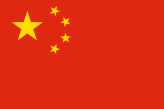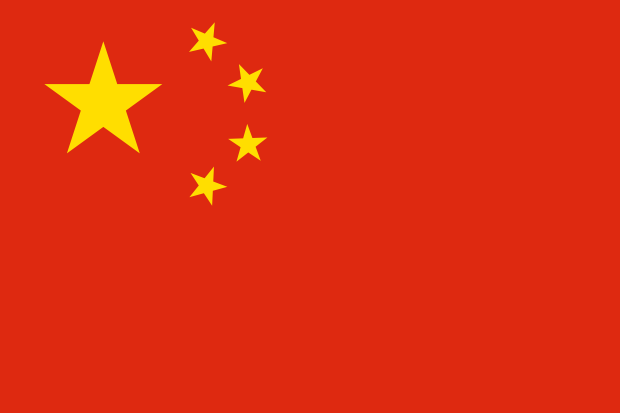
China

Flag is available in resolutions
![]() |
![]() |
China
China, officially the People’s Republic of China, stands as one of the world’s oldest continuous civilizations and a formidable global power. Encompassing a vast landmass and an immense population, its influence resonates across every continent, shaping global economics, politics, and culture. From its ancient dynastic roots to its current status as a technological and economic powerhouse, China’s trajectory is a compelling narrative of resilience, innovation, and profound transformation. Understanding this complex nation requires delving into its multifaceted geography, rich history, unique demographic challenges, and dynamic economic landscape.
Geographically, China is a land of extreme diversity and staggering scale, ranking as the third-largest country by land area. Its immense territory stretches from the Pacific Ocean in the east to the high mountains of Central Asia, and from the subarctic steppes of Mongolia to the tropical coasts of the South China Sea. This vastness gives rise to an astonishing array of landscapes: the towering peaks of the Himalayas and Kunlun Mountains define its southwestern borders, giving way to the elevated Tibetan Plateau. To the north and west lie expansive deserts like the Gobi and Taklamakan, while the eastern regions are dominated by fertile plains, most notably the North China Plain, nourished by the Yangtze and Yellow River. These rivers have been the cradles of Chinese civilization, supporting dense populations and extensive agriculture. The country’s climate is equally varied, ranging from arid and continental in the interior to monsoon-influenced subtropical and tropical along its coasts.
China’s history spans over 5,000 years, a chronicle marked by powerful imperial dynasties and remarkable innovation. Early civilization flourished along the Yellow River, giving rise to legendary dynasties like the Xia, Shang, and Zhou. The Qin Dynasty (221–206 BCE) unified China, commencing the construction of the Great Wall. The subsequent Han Dynasty (206 BCE–220 CE) established a sophisticated bureaucracy and expanded the empire, fostering the development of the Silk Road. Subsequent eras, including the Tang, Song, Ming, and Qing dynasties, saw China’s cultural, scientific, and technological advancements reach unparalleled heights, with inventions such as paper, gunpowder, the compass, and printing. The 19th and early 20th centuries brought the „Century of Humiliation“, culminating in the collapse of the Qing Dynasty in 1911 and the establishment of the Republic of China. After civil war, the People’s Republic of China (PRC) was proclaimed on October 1, 1949, under Mao Zedong. The Mao era saw radical transformations like the Great Leap Forward and Cultural Revolution. Following Mao’s death, Deng Xiaoping initiated economic reforms, ushering in the era of „socialism with Chinese characteristics“ and propelling China towards its current economic might.
Demographically, China remains the world’s most populous nation, home to over 1.4 billion people. It is predominantly Han Chinese (over 90%), but also hosts 55 officially recognized ethnic minorities, including the Zhuang, Hui, Manchu, Uyghur, and Tibetan peoples, primarily in border regions. Rapid urbanization has seen hundreds of millions migrate from rural to urban areas. Historically, the „One-Child Policy“ (1979-2015) profoundly shaped its demographics, leading to an aging population, a significant gender imbalance, and a shrinking workforce. In response, policies have shifted to two-child and then three-child limits to address these challenges. Economically, China has undergone an unprecedented transformation from a centrally planned system to a dynamic „socialist market economy“, becoming the world’s second-largest by nominal GDP. Decades of sustained growth, fueled by manufacturing, exports, and massive infrastructure investment, have lifted hundreds of millions out of poverty. Key sectors include advanced manufacturing, technology giants like Huawei and Alibaba, and a burgeoning service industry. Challenges persist, including environmental degradation, income inequality, and trade tensions, but China’s economic influence, notably through initiatives like the Belt and Road Initiative, continues to expand globally.
Information about China
The information comes from the publication CIA The World Factbook.
Automated text translation, excuse errors, please!
Country China is situated in a location / continent East Asia. China has an area of 9 596 961 km2 and 1 343 239 923 residents. The highest point has a height 8 850 above sea level. and it is called Mount Everest. The lowest point is located at the level of -154 above sea level and it is named Turpan Pendi. System of government is Communist state and the date of independence First October 1949. The capital city is Beijing. China has the international abbreviation CH.
Recommended to visit: Afrických vlajky
China - economy
Total gross domestic product (GDP) is 11 440 000 000 000 $. Total gross domestic product per capita in purchasing power parity is 8 500 $. GDP grows by 9.20 % a year. Inflation (consumer price index) is equal to 5.50 % a year. China have 795 500 000 working-age population (from a total population 1 343 239 923 people). Unemployment is at 6.50 %. China issued 4.60 % GDP to healt care and 4,30 % GDP to army. The public debt of the country is 43.50 % GDP. The total amount of foreign debt is 697 200 000 000 USD.
China - demography
As suggested above, China has 1 343 239 923 people. Population growth is in the amount 0.48 % per year. Number of children born per 1000 population per year is 12.31.Every mother has average 1.55 children. The infant mortality rate is 15.62 and maternal mortality 37.00 deaths per 100,000 births. Average estimated life expectancy makes 74.84 years. Mortality is 7.17 people per 1000 population per year.
China - transport and telecommunications
China has 3 860 800 km of roads, 86 000 km of railway lines and 497 airports. The total length of waterways (navigable rivers, canals, etc.) is 110 000 km. There is registered 2 030 ships.
Number of active mobile phones (sim card) in the country China is 986 253 000. Number of active fixed telephone lines is 285 115 000. China has 389 000 000 internet users, who have the available 19 772 000 Internet connections. China has been assigned a domain first Choose range .cn.
China - energetics
China consumes a year 4 693 000 000 000 kWh of electricity. Annual electricity production is 4 604 000 000 000 kWh in power plants with a total installed electrical capacity 877 700 000 kW. China exports 19 060 000 000 kWh and imports 55 450 000 000 kWh of electricity per year Energy mix of power generation is as follows: fossil fuels: 74.3 %, nuclear energy: 1 %, renewable: 2.3 %, hydropower: 22.4 %. The country China is harvested annually 4 073 000 barrels of oil.
World countries flags
Omalovánky pro děti:
Online omalovánky aut a autíček zdarmaObrázky budov a staveb online k vybarvení
Online omalovánky dinosauři
Online omalovánky dopravních prostředků
Obrázky koní online k vybarvení pro děti
Počítačové, internetové online omalovánky
Pohádkové postavy online k vybarvení
Obrázky povolání a zaměstnání lidí k vybarvení
Online omalovánky princezny k vybarvení
Příroda - obrázky k vybarvení na počítači
Omalovánky psi pro děti online k vybarvení
Online omalovánky roztomilých zvířatek
Vánoční, adventní online omalovánky zdarma
Velikonoční online omalovánky pro děti zdarma
Online omalovánky, obrázky vlaků k vybarvení
Blahopřání k narozeninám:
Texty z lásky k narozeninámNarozeninové přáníčko podle věku
Narozeninové blahopřání podle jmen
Textová přání k narozeninám sms
Narozeninová blahopřání podle jmen
Texty k svátku:
Blahopřání k svátku dětemBlahopřání k jmeninám pro ženu
Přáníčka k svátku pro děti
Přání k svátku sms
Gratulace k svátku podle jmen
Přání k jmeninám podle jmen
|
|
|
|
|
|
|
|
|
|
|
|
|

|

|

|

|

|

|

|

|

|

|

|

|
|

|

|