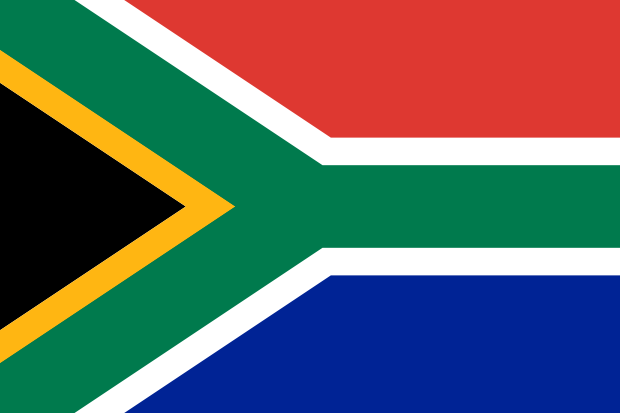
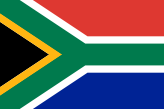
South Africa

Flag is available in resolutions
![]() |
![]() |
South Africa
South Africa, officially the Republic of South Africa, stands as a captivating nation at the southernmost tip of the African continent, a land of unparalleled natural beauty, profound historical depth, and vibrant cultural diversity. Often referred to as the „Rainbow Nation“ by Archbishop Desmond Tutu, it embodies a complex tapestry of peoples, languages, and landscapes, grappling with the legacy of its past while striving for a more equitable future. Its unique position, flanked by the Atlantic and Indian Oceans, has shaped its history, economy, and ecological richness, making it a critical player on the African and global stages.
Geographically, South Africa is a country of immense contrasts and breathtaking vistas. It spans a vast area, marked by a dramatic coastline that stretches over 2,500 kilometres. To the west, the arid Karoo semi-desert gives way to the rugged Cedarberg Mountains, while the east boasts the lush, subtropical coastline of KwaZulu-Natal. Dominating the interior are the expansive Highveld plateaus, which gradually rise to the majestic Drakensberg Mountains, home to the highest peaks in Southern Africa, including Thabana Ntlenyana. The country is also renowned for its rich mineral deposits, particularly gold, diamonds, platinum, and coal, which have profoundly influenced its economic development and attracted waves of immigration throughout its history. This diverse topography supports an extraordinary array of ecosystems, from desert and savanna to fynbos and forests, harbouring a significant portion of the world’s biodiversity.
South Africa’s history is a compelling narrative of ancient civilisations, colonial conquest, racial segregation, and a triumphant struggle for democracy. The land was originally inhabited by indigenous Khoisan hunter-gatherers and later by various Bantu-speaking peoples, who migrated southwards over centuries, establishing powerful kingdoms. European contact began in 1652 with the arrival of the Dutch East India Company, led by Jan van Riebeeck, who established a refreshment station at the Cape. This marked the beginning of colonial settlement, leading to conflicts over land and resources. The British seized the Cape Colony in the early 19th century, leading to tensions with the Afrikaans-speaking descendants of the Dutch settlers, known as Boers. These tensions culminated in the devastating Anglo-Boer Wars (1880-1881 and 1899-1902). In 1910, the Union of South Africa was formed, uniting the various British colonies and Boer republics, but it was built on a foundation of racial segregation. This system was formalised and drastically intensified with the election of the National Party in 1948, ushering in the brutal era of Apartheid – a system of institutionalised racial segregation and discrimination. The struggle against Apartheid, led by figures like Nelson Mandela and organisations like the African National Congress (ANC), was long and arduous, marked by immense sacrifice, international sanctions, and iconic moments such as the Sharpeville Massacre and the Soweto Uprising. Finally, after decades of resistance, negotiations, and the release of Nelson Mandela in 1990, South Africa held its first fully democratic, non-racial elections in 1994, ushering in a new era of freedom and reconciliation.
Demographically, South Africa is a vibrant mosaic of cultures and ethnicities, reflecting its complex history. With a population of over 60 million people, it is one of the most populous countries in Africa. The population is predominantly Black African (around 80%), followed by Coloured (mixed-race), White, and Indian/Asian communities. This diversity is further reflected in its linguistic landscape, with 11 official languages, including Zulu, Xhosa, Afrikaans, and English. English serves as the primary language of business and government, but indigenous languages are widely spoken across different regions. Despite the post-Apartheid commitment to equality, the country still faces significant demographic challenges, including high levels of poverty, unemployment, and stark economic disparities, which often align with historical racial divisions. Urbanisation is a continuing trend, with major cities like Johannesburg, Cape Town, and Durban serving as economic and cultural hubs, attracting people from rural areas in search of opportunities.
Economically, South Africa boasts the most industrialised and technologically advanced economy in Africa, though it frequently contends with Nigeria for the title of the continent’s largest by GDP. It is an emerging market and the only African member of the BRICS group of major emerging economies. The economy is highly diversified, with key sectors including mining (gold, platinum, diamonds, coal), agriculture (wine, fruits, maize), manufacturing (automotive, chemicals, textiles), and a robust financial services industry. Tourism is also a significant contributor, drawing millions of visitors annually to its stunning wildlife reserves, national parks, and vibrant cities. However, the economy is plagued by persistent structural issues. High levels of unemployment, particularly among the youth, and extreme income inequality (one of the highest Gini coefficients in the world) remain critical challenges. Slow economic growth, corruption, and an unreliable power supply further impede progress. Despite these hurdles, South Africa’s sophisticated infrastructure, abundant natural resources, and skilled labour force provide a strong foundation for future development, as the nation strives to achieve inclusive growth and address the socio-economic imbalances inherited from its past.
In conclusion, South Africa is a country of paradoxes and immense potential. Its journey from the depths of Apartheid to a multi-racial democracy is a testament to human resilience and the power of reconciliation. While it continues to navigate the profound challenges of inequality, unemployment, and social cohesion, its rich cultural heritage, extraordinary natural beauty, and strategic economic importance ensure its enduring significance on the global stage. The „Rainbow Nation“ remains a beacon of hope and a complex, evolving experiment in nation-building, continually striving to fulfil the promise of a truly democratic and equitable society for all its people.
Information about South Africa
The information comes from the publication CIA The World Factbook.
Automated text translation, excuse errors, please!
Country South Africa is situated in a location / continent Africa. South Africa has an area of 1 219 090 km2 and 48 810 427 residents. The highest point has a height 3 408 above sea level. and it is called Njesuthi. The lowest point is located at the level of 0 above sea level and it is named Atlantic Ocean. System of government is republic and the date of independence 31st May 1910. The capital city is Pretoria (administrative capital). South Africa has the international abbreviation SF.
Recommended to visit: Vlajka Norska
South Africa - economy
Total gross domestic product (GDP) is 562 200 000 000 $. Total gross domestic product per capita in purchasing power parity is 11 100 $. GDP grows by 3.10 % a year. Inflation (consumer price index) is equal to 5.00 % a year. South Africa have 17 660 000 working-age population (from a total population 48 810 427 people). Unemployment is at 24.90 %. South Africa issued 8.50 % GDP to healt care .The public debt of the country is 34.10 % GDP. The total amount of foreign debt is 46 070 000 000 USD.
South Africa - demography
As suggested above, South Africa has 48 810 427 people. Population growth is in the amount -0.41 % per year. Number of children born per 1000 population per year is 19.32.Every mother has average 2.28 children. The infant mortality rate is 42.67 and maternal mortality 300.00 deaths per 100,000 births. Average estimated life expectancy makes 49.41 years. Mortality is 17.23 people per 1000 population per year.
South Africa - transport and telecommunications
South Africa has 362 099 km of roads, 20 192 km of railway lines and 567 airports. There is registered 3 ships.
Number of active mobile phones (sim card) in the country South Africa is 64 000 000. Number of active fixed telephone lines is 4 127 000. South Africa has 4 420 000 internet users, who have the available 4 835 000 Internet connections. South Africa has been assigned a domain first Choose range .za.
South Africa - energetics
South Africa consumes a year 206 100 000 000 kWh of electricity. Annual electricity production is 232 100 000 000 kWh in power plants with a total installed electrical capacity 44 260 000 kW. South Africa exports 14 650 000 000 kWh and imports 12 190 000 000 kWh of electricity per year Energy mix of power generation is as follows: fossil fuels: 90.8 %, nuclear energy: 4.1 %, renewable: 0.5 %, hydropower: 1.5 %. The country South Africa is harvested annually 169 000 barrels of oil.
World countries flags
Omalovánky pro děti:
Online omalovánky aut a autíček zdarmaObrázky budov a staveb online k vybarvení
Online omalovánky dinosauři
Online omalovánky dopravních prostředků
Obrázky koní online k vybarvení pro děti
Počítačové, internetové online omalovánky
Pohádkové postavy online k vybarvení
Obrázky povolání a zaměstnání lidí k vybarvení
Online omalovánky princezny k vybarvení
Příroda - obrázky k vybarvení na počítači
Omalovánky psi pro děti online k vybarvení
Online omalovánky roztomilých zvířatek
Vánoční, adventní online omalovánky zdarma
Velikonoční online omalovánky pro děti zdarma
Online omalovánky, obrázky vlaků k vybarvení
Přání k narozeninám:
Narozeninová přáníčka podle jmenPřání k narozeninám dětem
Narozeninové přání pro ženu
Blahopřání k narozeninám podle jmen
Texty z lásky k narozeninám
Přáníčka k jmeninám:
Gratulace k svátku podle jmenPřání k svátku pro děti
Přáníčka k svátku podle jmen
Blahopřání k jmeninám, sms texty
Přáníčko k svátku pro ženu
Gratulace k jmeninám dětem
|
|
|
|
|
|
|
|
|
|
|
|
|
|
|
|
|
|
|
|
|

|
|
|
|
|
|
|