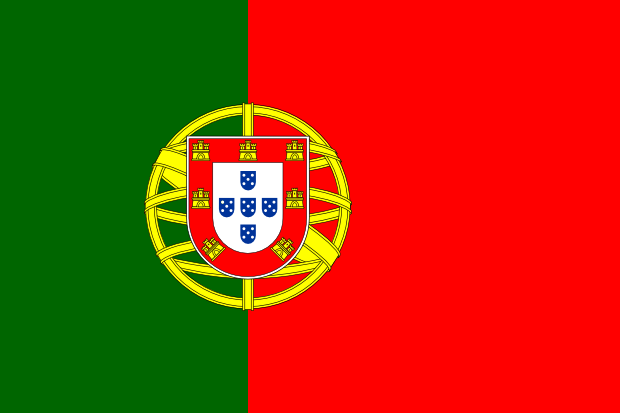
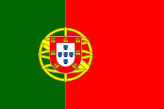
Portugal

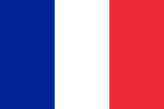
Flag is available in resolutions
![]() |
![]() |
Portugal
Portugal, a nation perched on the southwestern edge of the Iberian Peninsula, is a land rich in history, vibrant culture, and breathtaking landscapes. Its strategic Atlantic location profoundly shaped its destiny, transforming it from a small kingdom into a global maritime empire and today, a modern European republic known for its hospitality, cuisine, and melancholic Fado.
Geographically, Portugal presents a diverse tapestry. Its extensive coastline, stretching over 800 kilometers along the Atlantic Ocean, is defined by sandy beaches, dramatic cliffs, and picturesque fishing villages. The mainland is broadly divided by the Tagus River, which flows through Lisbon before emptying into the Atlantic. North of the Tagus, the landscape is typically mountainous and green, with a cooler, wetter climate, while the south, particularly the Alentejo and Algarve regions, is characterized by rolling plains, cork oak forests, and a warmer, drier Mediterranean climate. Beyond the mainland, Portugal’s territory includes two autonomous archipelagos: Madeira, known for its volcanic landscapes and lush vegetation, and the Azores, a cluster of nine islands renowned for their dramatic scenery, hot springs, and whale watching opportunities. These islands are vital to Portugal’s identity and economy, offering unique ecosystems and boosting its tourism appeal.
Portugal’s history is a captivating saga of conquest, exploration, and resilience. Its strategic location attracted various ancient civilizations, including the Celts, Romans, and later, the Visigoths. The Moorish invasion in the 8th century left an indelible mark, introducing advanced agricultural techniques, architecture, and scientific knowledge. The Reconquista, the Christian reconquest of the Iberian Peninsula, led to the establishment of the Kingdom of Portugal in 1139, with Afonso Henriques as its first king. The 15th and 16th centuries marked Portugal’s Golden Age, the Age of Discoveries, where pioneers like Vasco da Gama and Ferdinand Magellan established a vast maritime empire from Brazil to Japan, profoundly influencing global trade and culture. This golden era, however, was followed by a period of decline, exacerbated by the loss of independence to Spain (1580-1640) and the devastating Lisbon earthquake of 1755. The 19th and 20th centuries brought political instability, culminating in a long dictatorship under António de Oliveira Salazar. The peaceful Carnation Revolution of 1974 restored democracy, leading to Portugal’s integration into the European Economic Community (now the EU) in 1986, a pivotal moment for its development and stability.
Demographically, Portugal faces several contemporary challenges. With a population of just over 10 million, it is one of the less densely populated countries in Western Europe. The population is heavily concentrated along the coast, particularly around Lisbon and Porto, the two largest urban centers. Portugal grapples with an aging population, a common issue across many European nations, driven by low birth rates and increased life expectancy. Historically, emigration has been a significant factor, with many Portuguese seeking opportunities abroad, particularly to France, Germany, and Brazil. More recently, however, Portugal has become an attractive destination for immigrants, drawn by its quality of life, climate, and accessible residency programs, helping to counteract a shrinking workforce. The official language is Portuguese, a Romance language spoken by over 250 million people worldwide, a testament to Portugal’s historical reach.
Portugal’s economy has undergone significant transformation, particularly since its entry into the EU. Once heavily reliant on agriculture and traditional industries, it has diversified into a modern, service-based economy. Tourism is now a cornerstone, with millions flocking annually to its sun-drenched beaches, historic cities, and scenic countryside, significantly contributing to its GDP and employment. Other key sectors include information technology, renewable energy, and manufacturing, particularly in automotive components and cork production, where Portugal is a world leader. While recovering from the 2008 financial crisis and sovereign debt crisis, Portugal has shown resilience, implementing structural reforms and fostering a dynamic business environment. Challenges persist, including high public debt and the need for investment in innovation and education to boost competitiveness, though recent years have seen consistent economic growth.
Portuguese culture is a rich mosaic, deeply influenced by its maritime history and diverse heritage. Fado, the soulful and melancholic music genre recognized by UNESCO, encapsulates the Portuguese concept of „saudade“ – a deep, nostalgic longing. The country’s cuisine is celebrated for its fresh seafood, olive oil, and diverse pastries like the iconic „pastel de nata“. Architecture ranges from Roman and Moorish ruins to the intricate Manueline style, a uniquely Portuguese Gothic expression, and the grandeur of Baroque churches. Family values remain strong, and Roman Catholicism continues to play a role in national life, marked by pilgrimages and festivals. The Portuguese people are generally known for their warmth, hospitality, and a relaxed pace of life, reflecting a culture that values community and tradition alongside modernity.
Politically, Portugal operates as a semi-presidential republic. The President, directly elected, holds significant powers, including the ability to dissolve parliament and appoint the Prime Minister, who leads the government. The unicameral Assembly of the Republic is the legislative body. Portugal is a committed member of the European Union, actively participating in its institutions and policies, which has been instrumental in its economic and social development. The country is also a member of NATO, the United Nations, and the Community of Portuguese Language Countries (CPLP), reflecting its commitment to international cooperation and its historical ties to Lusophone nations worldwide.
From its ancient roots to its modern European identity, Portugal remains a country of enduring charm and profound historical significance. Its blend of natural beauty, rich cultural tapestry, and welcoming populace makes it a unique and resilient nation. As it navigates the 21st century, Portugal draws strength from its past while embracing future opportunities, forever bound by its Atlantic spirit and distinct place in the world.
Information about Portugal
The information comes from the publication CIA The World Factbook.
Automated text translation, excuse errors, please!
Country Portugal is situated in a location / continent Europe. Portugal has an area of 92 090 km2 and 10 781 459 residents. The highest point has a height 2 351 above sea level. and it is called Ponta do Pico. The lowest point is located at the level of 0 above sea level and it is named Atlantic Ocean. System of government is republic and the date of independence 5th October 1910. The capital city is Lisbon. Portugal has the international abbreviation PO.
Recommended to visit: Vlajka Sovětského svazu
Portugal - economy
Total gross domestic product (GDP) is 252 200 000 000 $. Total gross domestic product per capita in purchasing power parity is 23 700 $. GDP grows by -1.50 % a year. Inflation (consumer price index) is equal to 3.70 % a year. Portugal have 5 543 000 working-age population (from a total population 10 781 459 people). Unemployment is at 12.70 %. Portugal issued 11.30 % GDP to healt care and 2,30 % GDP to army. The public debt of the country is 112.80 % GDP. The total amount of foreign debt is 548 300 000 000 USD.
Portugal - demography
As suggested above, Portugal has 10 781 459 people. Population growth is in the amount 0.18 % per year. Number of children born per 1000 population per year is 9.76.Every mother has average 1.51 children. The infant mortality rate is 4.60 and maternal mortality 8.00 deaths per 100,000 births. Average estimated life expectancy makes 78.70 years. Mortality is 10.86 people per 1000 population per year.
Portugal - transport and telecommunications
Portugal has 82 900 km of roads, 3 319 km of railway lines and 65 airports. The total length of waterways (navigable rivers, canals, etc.) is 210 km. There is registered 109 ships.
Number of active mobile phones (sim card) in the country Portugal is 12 285 000. Number of active fixed telephone lines is 4 525 000. Portugal has 5 168 000 internet users, who have the available 3 664 000 Internet connections. Portugal has been assigned a domain first Choose range .pt.
Portugal - energetics
Portugal consumes a year 47 810 000 000 kWh of electricity. Annual electricity production is 50 300 000 000 kWh in power plants with a total installed electrical capacity 17 390 000 kW. Portugal exports 3 191 000 000 kWh and imports 5 814 000 000 kWh of electricity per year Energy mix of power generation is as follows: fossil fuels: 48.3 %, nuclear energy: 0 %, renewable: 22.5 %, hydropower: 23.3 %. The country Portugal is harvested annually 1 926 barrels of oil.
World countries flags
Omalovánky pro děti:
Online omalovánky aut a autíček zdarmaObrázky budov a staveb online k vybarvení
Online omalovánky dinosauři
Online omalovánky dopravních prostředků
Obrázky koní online k vybarvení pro děti
Počítačové, internetové online omalovánky
Pohádkové postavy online k vybarvení
Obrázky povolání a zaměstnání lidí k vybarvení
Online omalovánky princezny k vybarvení
Příroda - obrázky k vybarvení na počítači
Omalovánky psi pro děti online k vybarvení
Online omalovánky roztomilých zvířatek
Vánoční, adventní online omalovánky zdarma
Velikonoční online omalovánky pro děti zdarma
Online omalovánky, obrázky vlaků k vybarvení
Dále doporučujeme:
Zajímavé webové stránkyLinky na partnerské weby
Partnerské internetové stránky
Doporučené odkazy
Doporučené internetové odkazy
Omalovánky pro děti:
Online omalovánky aut a autíček zdarmaObrázky budov a staveb online k vybarvení
Online omalovánky dinosauři
Online omalovánky dopravních prostředků
Obrázky koní online k vybarvení pro děti
Počítačové, internetové online omalovánky
Pohádkové postavy online k vybarvení
Obrázky povolání a zaměstnání lidí k vybarvení
Online omalovánky princezny k vybarvení
Příroda - obrázky k vybarvení na počítači
Omalovánky psi pro děti online k vybarvení
Online omalovánky roztomilých zvířatek
Vánoční, adventní online omalovánky zdarma
Velikonoční online omalovánky pro děti zdarma
Online omalovánky, obrázky vlaků k vybarvení
Tapety na plochu:
HD tapety na plochu Windows 1280x720Pozadí pro mobilní telefony 1200x1920
Full HD tapety na plochu 1920x1080
Tapety na plochu 2560x1600
Wallpapers na plochu 1600x1200
Wallpapery na plochu počítače 1920x1200
Obrázky na plochu Windows 1366x768
Pozadí na plochu 1680x1050
Přáníčko k jmeninám:
Přání k svátku pro dětiGratulace k svátku podle jmen
Přání k jmeninám sms
Přáníčka k svátku dětem
Blahopřání k jmeninám pro kamarádku
Přáníčka k jmeninám pro ženu
Tapety na plochu:
Wallpapers na plochu 1600x1200Wallpapery na plochu 1440x960
Full HD tapety na mobil 1080x1920
Windows wallpapers 1600x2560
Tapety na PC, mobil tablet 1536x2048
Obrázky na plochu 1366x1024
Pozadí na plochu 1440x900
Wallpapery na plochu počítače 1920x1200
Přáníčko k jmeninám:
Přání k svátku pro dětiGratulace k svátku podle jmen
Přání k jmeninám sms
Přáníčka k svátku dětem
Blahopřání k jmeninám pro kamarádku
Přáníčka k jmeninám pro ženu
Přání, gratulace, blahopřání a přáníčka:
Hezká přání k narození miminkaNejlepší básnička k svátku
Neobvyklá přání k jmeninám podle jmen
Nejkrásnější narozeninová přání
Humorná přání k sňatku
Humorná blahopřání k jmeninám
Obrázková přání pro novomanžele
Vzorová narozeninový text
Nejhezčí blahopřání k výročí svatby
Nejlepší SMS, MMS gratulace k svátku k jmeninám
Přání k narozeninám:
Texty k narozeninám pro mužeNarozeninová blahopřání podle jmen
Texty z lásky k narozeninám
Přáníčko k narozeninám podle jmen
Přání k narozeninám dětem
Romantické básničky:
Romantické SMS pro klukaRomantické zprávy klukovi
Romantické psaní pro holku
Zamilované SMS na dobrou noc
Zamilované verše holce
Stýskací sms vzkazy
Omluvné sms zprávy
Zamilované básničky miláčkovi
|
|
|
|
|
|
|
|
|
|
|
|
|
|
|

|
|
|
|
|
|

|
|

|

|
|
|
|