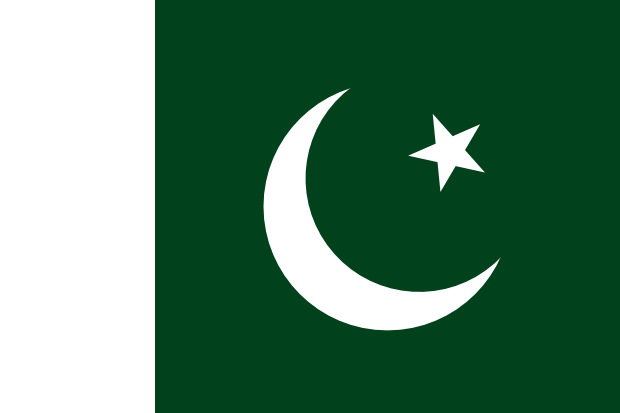
Pakistan

Flag is available in resolutions
![]() |
![]() |
Pakistan
Pakistan, a nation steeped in ancient history and vibrant culture, stands at the crossroads of South Asia, the Middle East, and Central Asia. Officially the Islamic Republic of Pakistan, it emerged on the world stage in 1947 as a homeland for Muslims in British India. Its strategic geopolitical position, diverse landscapes, and complex socio-economic fabric make it a country of immense importance and intrigue, grappling with both profound challenges and significant opportunities. From the towering peaks of the Himalayas to the vast plains of the Indus River and the Arabian Sea coastline, Pakistan’s geography has profoundly shaped its history, demography, and economy, creating a tapestry of regions each with its own distinct character.
Geographically, Pakistan is a land of striking contrasts and immense natural beauty. In its north, it is home to some of the world’s highest mountain ranges, including the Himalayas, Karakoram, and Hindu Kush, boasting K2, the world’s second-highest peak. These formidable mountains give way to the extensive Indus River Plain, the country’s agricultural heartland, nourished by the mighty Indus River and its tributaries. To the west, arid plateaus and deserts dominate, bordering Iran and Afghanistan, while the south features the coast along the Arabian Sea, including the bustling port city of Karachi. This diverse topography contributes to varied climates, from alpine in the north to arid and semi-arid in the west and central regions, and a more moderate climate along the coast. The Indus River, often referred to as Pakistan’s lifeline, not only irrigates vast tracts of land but has also been the cradle of ancient civilizations and continues to be central to the nation’s economic well-being and identity.
Pakistan’s history is as rich and multifaceted as its landscape, tracing its roots back to the Bronze Age Indus Valley Civilization, one of the world’s earliest urban cultures, with significant archaeological sites like Mohenjo-Daro and Harappa. Over millennia, the region witnessed the ebb and flow of numerous empires and influences, including the Persians, Greeks under Alexander the Great, various Hindu dynasties, and later, a profound impact from Islamic invaders and Sufi saints starting from the 8th century. This led to the establishment of powerful Islamic empires, most notably the Mughal Empire, which left an indelible mark on the region’s art, architecture, and culture. The advent of British colonial rule in the 18th and 19th centuries unified much of the subcontinent, but also sowed the seeds of communal division. The demand for a separate Muslim state gained momentum under leaders like Muhammad Ali Jinnah and Allama Iqbal, culminating in the partition of British India and the creation of Pakistan on August 14, 1947. The early years of independence were fraught with challenges, including mass migrations, the Kashmir conflict, and political instability, which eventually led to the secession of East Pakistan (now Bangladesh) in 1971. Despite these trials, Pakistan developed its nuclear capabilities, becoming a declared nuclear power in 1998, a significant milestone in its journey towards national security and strategic autonomy.
Demographically, Pakistan is the world’s fifth-most populous country, with a rapidly growing population exceeding 240 million. This youthful demographic presents both a dividend and a challenge, requiring significant investment in education, healthcare, and job creation. The nation is a melting pot of diverse ethnic groups, reflecting its history and geography. The major groups include the Punjabis, Pashtuns, Sindhis, Balochs, and Muhajirs (descendants of Muslims who migrated from India after partition), each contributing to the country’s rich cultural mosaic. While Urdu is the national language and a symbol of national unity, a multitude of regional languages thrive, including Punjabi, Pashto, Sindhi, Balochi, Saraiki, and others, alongside English, which serves as an official language and is widely used in government and higher education. Islam is the state religion, with an overwhelming majority of the population being Muslim, predominantly Sunni, with a significant Shia minority. There are also smaller communities of Christians, Hindus, and other religious minorities, who contribute to the nation’s pluralistic society, albeit often facing challenges related to religious freedom and social integration. Rapid urbanization is a defining demographic trend, with major cities like Karachi, Lahore, and Islamabad experiencing significant growth and becoming centers of economic activity and cultural exchange.
Economically, Pakistan is a developing country with a mixed economy that relies heavily on agriculture, textiles, and services. Agriculture remains a cornerstone, employing a large portion of the workforce and contributing significantly to the GDP, with major crops including cotton, wheat, rice, and sugarcane. The industrial sector is dominated by textiles, which is Pakistan’s largest export industry, along with cement, fertilizers, and food processing. The services sector, encompassing finance, trade, and IT, has been growing steadily and now accounts for the largest share of the GDP. Despite its potential, Pakistan’s economy faces persistent challenges such as high inflation, current account deficits, substantial foreign debt, energy shortages, and political instability, which often deter foreign investment. The China-Pakistan Economic Corridor (CPEC), a flagship project of China’s Belt and Road Initiative, represents a significant development, aiming to upgrade Pakistan’s infrastructure, energy sector, and port facilities, promising to transform the country’s economic landscape and regional connectivity. Remittances from overseas Pakistani workers also form a vital source of foreign exchange, supporting countless families and contributing to national income.
Pakistan’s culture is a vibrant blend of Islamic, Persian, Central Asian, and indigenous influences, shaped by centuries of interaction and exchange. Sufi traditions, with their emphasis on love, peace, and spiritual harmony, are deeply ingrained in Pakistani society, expressed through music, poetry, and shrines that attract devotees from all faiths. The poetry of Allama Iqbal, the national poet, and the musical genre of Qawwali, a form of Sufi devotional music, are testament to this rich cultural heritage. Pakistani cuisine is renowned for its rich flavors and regional diversity, often spicy and aromatic, with dishes like Biryani, Nihari, and Kebabs being national favorites. Cricket is not just a sport but a national obsession, uniting the country in passion and pride. Beyond these aspects, Pakistan faces significant contemporary challenges, including internal security issues stemming from extremism and terrorism, regional geopolitical tensions, and the growing impact of climate change, which manifests in severe floods and droughts. Addressing these multifaceted issues requires robust governance, sustained economic reforms, and continued efforts towards social cohesion and education. Despite the complexities, Pakistan’s resilient people, strategic location, and rich cultural heritage offer immense potential for growth and development, as it navigates its path towards stability and prosperity in the 21st century.
Information about Pakistan
The information comes from the publication CIA The World Factbook.
Automated text translation, excuse errors, please!
Country Pakistan is situated in a location / continent South Asia. Pakistan has an area of 796 095 km2 and 190 291 129 residents. The highest point has a height 8 611 above sea level. and it is called K2. The lowest point is located at the level of 0 above sea level and it is named Indian Ocean. System of government is Federal Republic and the date of independence 14th August 1947. The capital city is Islamabad. Pakistan has the international abbreviation PK.
Recommended to visit: Obrázky vlajek států
Pakistan - economy
Total gross domestic product (GDP) is 494 800 000 000 $. Total gross domestic product per capita in purchasing power parity is 2 800 $. GDP grows by 2.40 % a year. Inflation (consumer price index) is equal to 11.90 % a year. Pakistan have 58 410 000 working-age population (from a total population 190 291 129 people). Unemployment is at 5.60 %. Pakistan issued 2.60 % GDP to healt care and 3,00 % GDP to army. The public debt of the country is 60.10 % GDP. The total amount of foreign debt is 61 830 000 000 USD.
Pakistan - demography
As suggested above, Pakistan has 190 291 129 people. Population growth is in the amount 1.55 % per year. Number of children born per 1000 population per year is 24.30.Every mother has average 3.07 children. The infant mortality rate is 61.27 and maternal mortality 260.00 deaths per 100,000 births. Average estimated life expectancy makes 66.35 years. Mortality is 6.80 people per 1000 population per year.
Pakistan - transport and telecommunications
Pakistan has 260 760 km of roads, 7 791 km of railway lines and 151 airports. There is registered 11 ships.
Number of active mobile phones (sim card) in the country Pakistan is 111 000 000. Number of active fixed telephone lines is 5 722 000. Pakistan has 20 431 000 internet users, who have the available 340 834 Internet connections. Pakistan has been assigned a domain first Choose range .pk.
Pakistan - energetics
Pakistan consumes a year 74 350 000 000 kWh of electricity. Annual electricity production is 93 350 000 000 kWh in power plants with a total installed electrical capacity 20 200 000 kW. Pakistan exports 0 kWh and imports 0 kWh of electricity per year Energy mix of power generation is as follows: fossil fuels: 65.2 %, nuclear energy: 2.3 %, renewable: 0.0 %, hydropower: 32.5 %. The country Pakistan is harvested annually 63 080 barrels of oil.
World countries flags
Omalovánky pro děti:
Online omalovánky aut a autíček zdarmaObrázky budov a staveb online k vybarvení
Online omalovánky dinosauři
Online omalovánky dopravních prostředků
Obrázky koní online k vybarvení pro děti
Počítačové, internetové online omalovánky
Pohádkové postavy online k vybarvení
Obrázky povolání a zaměstnání lidí k vybarvení
Online omalovánky princezny k vybarvení
Příroda - obrázky k vybarvení na počítači
Omalovánky psi pro děti online k vybarvení
Online omalovánky roztomilých zvířatek
Vánoční, adventní online omalovánky zdarma
Velikonoční online omalovánky pro děti zdarma
Online omalovánky, obrázky vlaků k vybarvení
Narozeninové přáníčko:
Narozeninový text podle jmenTextová přání k narozeninám pro muže
Narozeninové přáníčko dětem
Gratulace k narozeninám podle jmen
Přáníčka k narozeninám sms
Gratulace k svátku:
Přáníčka k jmeninám podle jmenPřáníčko k jmeninám pro muže
Blahopřání k svátku podle jmen
Přání k svátku pro děti
Přáníčko k svátku, sms texty
Texty k svátku sms
|
|
|
|
|
|
|
|
|
|
|
|
|
|
|

|
|

|
|
|
|

|
|

|

|
|
|

|